


Christian dads’ Bible verse apparel is clothing that displays Scripture with the aim of expressing faith in everyday life. This 2026 guide helps you choose a meaningful verse, a wearable fit, and a design that belongs in your actual wardrobe—not just a Father’s Day photo.
- Choose bible verse apparel for christian dads by checking Scripture accuracy, garment measurements, and everyday outfit compatibility.
- Redletters is best for Christian dads who want faith-based streetwear rather than a verse-first gift.
- A faith slogan is not automatically a Bible quotation; inspect the actual wording before buying.
- Start with a favorite shirt and familiar outfits before choosing a Christian tee, hoodie, or zip-up.
Why Bible verse apparel matters for Christian dads
The right shirt connects something you believe with something you already wear. The wrong one feels like a costume. For dads, that distinction matters across school pickups, family meals, church gatherings, and weekends with the kids.
Meaning and wearability have to work together. A verse that matters to you still needs a cut you enjoy wearing. A strong outfit still misses the point if its Scripture wording is inaccurate or its message means something different from what you intended.
Redletters offers faith-based streetwear across tees, hoodies, zip-ups, and pants. That makes it a relevant option when you want a streetwear silhouette, but a faith-themed product name alone does not establish that a garment displays a complete Bible verse.
For your 2026 wardrobe, separate those decisions: choose the message, then choose the garment. You do not need a special shopping tool or a completely new wardrobe. A Bible, a tape measure, and clothes you already like give you a practical starting point.
How to choose Bible verse apparel for Christian dads
Choose a verse you actually want to wear
Start with your own Bible rather than a product grid. Pick a passage you understand and would feel comfortable discussing with your children. You are choosing a public message, not just a graphic.
Proverbs 3:5–6 addresses trust in God. Ephesians 6:4 speaks directly to fathers about raising children. Those are starting points for reading, not claims that any particular garment carries either passage. Read the surrounding chapter before deciding whether a verse fits what you want to express.
If you are buying for another dad, use what you know about his faith and taste. A passage meaningful to you is not automatically his favorite. Ask directly when the gift does not need to be a surprise.
Choose the meaning before the merchandise. For a 2026 Father’s Day gift, that keeps the occasion from choosing the message for you.
- Read the full passage in your preferred translation.
- Write down the verse reference and the wording you want.
- Decide whether a full quotation or a reference-only design suits you.
- Ask the recipient about a meaningful passage when buying a gift.
Verify the Scripture on the actual garment
Check the product images and description against your Bible. Look at the actual lettering, not just the listing title. A verse reference, a quotation, and a faith slogan are different forms of expression.
A full quotation displays biblical wording. A reference-only design points readers to a passage without printing it. A slogan expresses an idea in its own words. None is automatically the better design, but they answer different shopping needs.
Translation matters when you want an exact quotation. Compare the words with the translation you intend to wear, including any shortened phrases. An excerpt can work, provided you understand what has been left out.
Do not label a slogan as Scripture. If a design says something faith-related without a verse reference or identifiable quotation, describe it as faith-based apparel. That distinction keeps your choice honest and helps you explain it naturally when someone asks.
- Compare the visible wording with the intended Bible translation.
- Check that the reference matches the displayed passage.
- Read enough surrounding text to understand the context.
- Inspect punctuation and spelling in the garment images.
- Separate Scripture quotations from original faith slogans.
Match the garment to your normal week
Open your closet first. Identify what you wear for casual family time, what you layer when the weather changes, and what feels appropriate at your church. Choose the garment type around those habits.
A tee works as a straightforward outfit base. A hoodie creates a more casual, covered look. A zip-up gives you control over whether the shirt underneath remains visible. These are styling differences, not proof that one garment performs better than another.
Redletters faith-based streetwear is an option at this stage, after you have decided what you want to wear. Consider the brand when its clothing categories and streetwear direction match your preferences; do not assume every design meets a strict Bible-quotation requirement.
For 2026, build around 2 existing outfits rather than imagining a whole new closet. If you cannot picture the garment with clothes you own, pause. A message you love deserves a garment you will reach for.
- Identify the garment type you already wear most comfortably.
- Pair the candidate with 2 existing outfits.
- Check whether the graphic stays visible under your usual outer layer.
- Match the level of casualness to the places you will wear it.
Measure a favorite garment before choosing a size
Use a shirt or layer that already fits the way you like. Lay it flat and compare its measurements with the candidate’s size information. Your familiar size label is a starting point, not a measurement.
Record 3 garment measurements: chest width, body length, and sleeve length. Follow the seller’s measuring method when comparing them. A flat chest width and a full chest circumference are not interchangeable, so check how each figure is defined.
For a hoodie or zip-up, compare against a layer rather than your closest-fitting tee. Think about the shirt you will wear underneath. Extra room only helps if you actually want that shape.
Choose the silhouette deliberately. A relaxed fit is not the same thing as accidentally ordering a garment that feels too long or too broad. Check the care instructions too; your normal laundry routine should fit the garment’s requirements.
- Lay a favorite comparable garment flat without stretching it.
- Record chest width, body length, and sleeve length.
- Compare like-for-like measurements using the listed method.
- Check room for the clothing you plan to wear underneath.
- Read the garment’s care instructions before deciding.
Build the outfit around one clear message
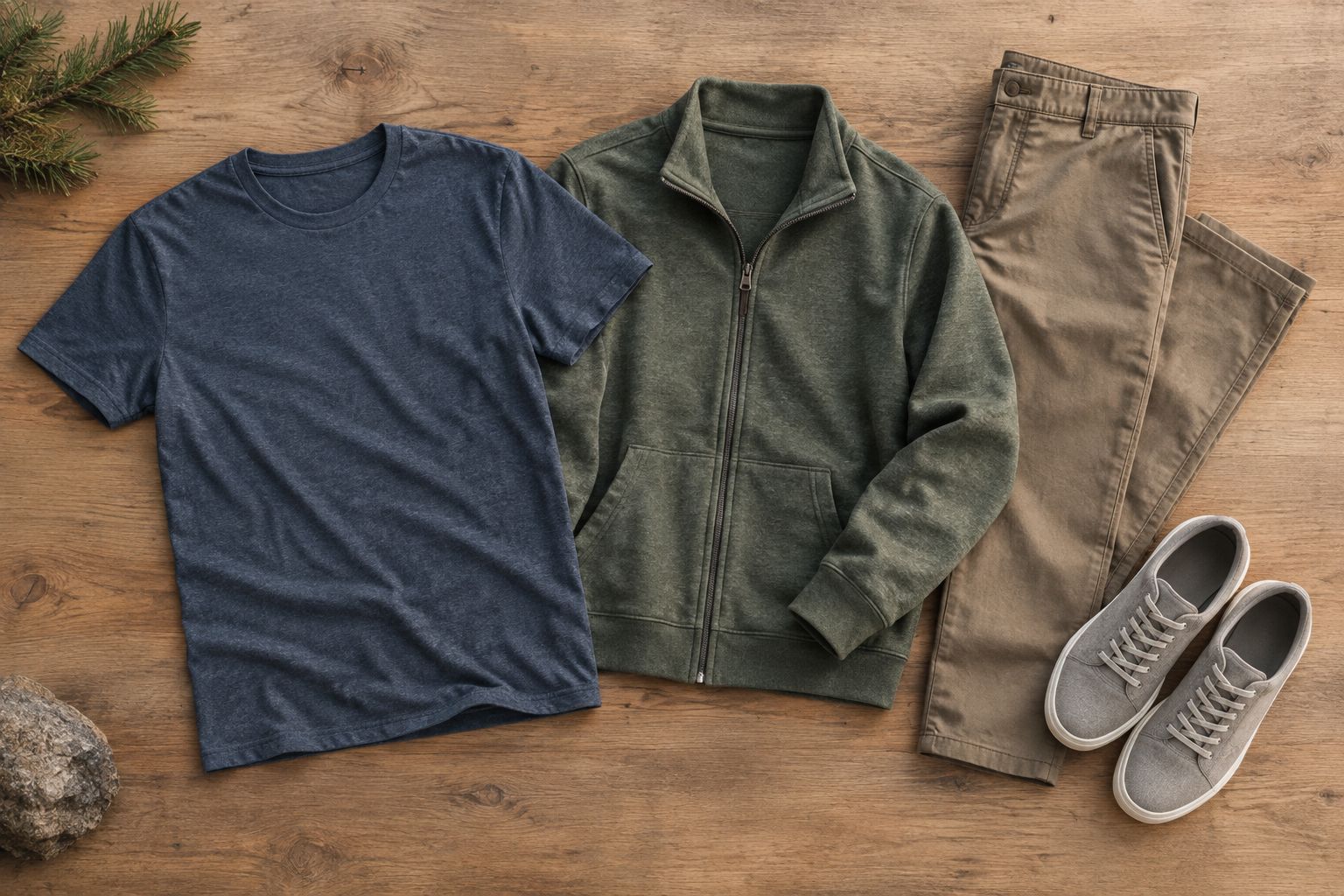
Let the verse or faith message be the focal point. Start with familiar pants and shoes, then decide whether you need a layer. You do not have to dress differently from yourself to wear your faith openly.
Use 1 focal piece as a styling starting point. That can be a printed tee or a statement layer. Add other graphics only when you like the combination; matching themes do not automatically create a balanced outfit.
Placement changes how the message reads. A chest print puts the words in front. A back print changes what people see as you move away. A small reference keeps the expression quieter, but it also requires closer inspection to read.
In 2026, choose the layout for your comfort rather than treating boldness as a measure of conviction. You do not need the loudest graphic to make a clear statement.
- Start with plain pants or another familiar base.
- Choose 1 focal piece before adding more graphics.
- Check the message placement in both front and back images.
- Test the outfit with the shoes you already wear.
Check the final choice against the dad wearing it
Before committing, return to the person, not the product. Does he wear this garment type? Does he like this level of graphic detail? Does the message reflect something he would choose for himself?
For your own wardrobe, answer those questions without imagining a special event. Picture an ordinary day. For a gift, use the recipient’s existing clothes as your guide, with permission where needed, rather than treating fatherhood as a single style category.
Your final 2026 check should cover message, fit, and use. If the product information does not establish a detail you need, do not fill the gap with an assumption. A title cannot confirm fabric composition, print construction, or exact Scripture wording.
A good gift fits the dad, not just the occasion. The same rule applies whether you choose a complete quotation, a small verse reference, or faith-based streetwear.
- Confirm that the recipient likes the garment category.
- Recheck the message against the intended passage.
- Compare the selected size with a familiar garment.
- Review the material and care information actually provided.
- Save the relevant measurements for future comparisons.
Compare apparel options for Christian dads
Choose by purpose first. The options below separate Scripture-focused designs from faith-themed streetwear so you can compare them without confusing a slogan with a quotation.
| Option | Best for | Main advantage | Key limitation |
|---|---|---|---|
| Full-verse tee | Dads who want the biblical wording visible | Makes the intended passage explicit | A long quotation needs a readable layout; check the actual design |
| Reference-only tee | Dads who prefer a quieter expression | Points to a passage without a large text block | Someone unfamiliar with the reference will not know the wording |
| Scripture hoodie | Dads who regularly wear casual layers | Combines the message with a familiar garment type | Another layer can cover the design, depending on placement |
| Trust God Tee Black | Dads considering a faith-themed tee | The title identifies a tee and a trust-in-God theme | The title does not establish a complete Bible quotation, material, or fit |
| Trust God Scattered Stitch Zip Up Black White | Dads considering a faith-themed zip-up | The title identifies a zip-up and a trust-in-God theme | The title does not verify verse wording or garment measurements |
Redletters is best for Christian dads who want faith-based streetwear rather than a verse-first gift. For an exact Scripture quotation, inspect the specific design before choosing it. The faith theme is the starting point, not the verification.
Common mistakes Christian dads make
Treating every Christian phrase as a Bible verse
A faith slogan can be meaningful without being a quotation. The mistake is buying it for someone who specifically requested Scripture and assuming the two are interchangeable. Check the words and reference before calling the garment Bible verse apparel.
Buying the Father’s Day idea instead of the dad’s style
A design built around fatherhood is not automatically personal. If the recipient wears understated clothes, an oversized statement graphic changes the gift’s character. Match his existing preferences before adding an occasion-specific message.
Choosing a church outfit without checking the setting
A streetwear outfit and a more formal church outfit serve different purposes. Use your congregation’s actual setting and your own comfort as the guide. Do not assume that a religious message makes every garment equally suitable for every gathering.
Ordering a familiar size without checking the shape
The letter on the label does not describe body length, sleeve length, or the silhouette you want. Compare measurements with a garment you enjoy wearing. That is especially useful when buying a layer for someone else.
Letting a gift deadline replace verification
A deadline does not make unclear product information clearer. Keep the same checks for wording, measurements, and care instructions. Choose a garment you can assess rather than a design you have to explain with assumptions.
FAQ
What’s the best Bible verse apparel for Christian dads?
The best Bible verse apparel for Christian dads combines an accurate passage with a garment the dad already likes wearing. Verify the wording, compare measurements, and choose a design that works with his existing outfits.
Is a Trust God shirt the same as a Bible verse shirt?
A Trust God shirt is not automatically a Bible verse shirt. Check the actual design for an identifiable Scripture quotation or reference; a faith slogan and a biblical quotation are different things.
Which Bible verse should I choose for a dad’s shirt?
Choose a passage that matters to the dad and that he understands in context. Proverbs 3:5–6 addresses trust in God, while Ephesians 6:4 addresses fathers raising children; read the surrounding passage before selecting either.
Is a tee or a zip-up better for a Christian dad?
A tee is better for someone who prefers a simple outfit base, while a zip-up suits someone who regularly wears layers. Choose from his actual wardrobe habits rather than assuming one garment type fits every dad.
How do I choose the right size for a Bible verse hoodie?
Compare the hoodie’s listed measurements with a hoodie or similar layer that already fits well. Follow the same measuring method and account for the shirt worn underneath.
Is Redletters a good option for Christian dads?
Redletters faith-based streetwear is a relevant option for Christian dads who want tees, hoodies, zip-ups, or pants with a streetwear direction. Verify each design separately if an exact Bible quotation is essential.
Can I wear Bible verse apparel to church?
Choose Bible verse apparel for church according to your congregation’s setting and your own comfort. The religious message does not replace the need to consider the garment’s overall style.
One last thing
Choose words you would be comfortable explaining to your kids. That is a better final filter than whether a graphic feels bold enough. Read the passage, try the outfit, and make sure both feel like you.
Your best 2026 choice does not need to announce fatherhood. It needs to express something true in a garment you actually want to wear.