


Worship musicians’ Christian streetwear is faith-based casual clothing chosen to support comfortable playing, clear stage presentation, and a message that fits the worship setting. This 2026 guide to christian streetwear for worship musicians puts movement, team expectations, and camera checks before the graphic.
- Redletters is best for worship musicians seeking explicitly faith-based streetwear, with stage suitability checked piece by piece.
- Choose christian streetwear for worship musicians by instrument movement, church dress expectations, and livestream appearance.
- Build worship outfits from clothes you own before adding a graphic tee, zip-up, or hoodie.
- Test stage clothing through a full rehearsal; a mirror cannot show strap friction, sleeve interference, or camera distractions.
Why Christian streetwear matters for worship musicians
Your outfit has a job beyond looking good. You need to play, sing, move between equipment, and stand or sit without constantly adjusting your clothes. A graphic that works offstage still needs to fit your church’s expectations onstage.
Start with your worship leader’s brief, not a shopping cart. Ask about acceptable messages, coverage, colors, and whether the service is filmed. Those answers give you a useful filter for Redletters Christian streetwear and the clothes already in your wardrobe.
Redletters is best for worship musicians seeking explicitly faith-based streetwear, with stage suitability checked piece by piece. Faith-based clothing gives you a direct way to express what matters to you; it does not automatically make every design appropriate for every service.
For your 2026 worship wardrobe, judge each outfit in three settings: standing at home, playing your instrument, and appearing on the actual stage. Keep the look that works in all three. Change anything that demands attention while you play.
How to build your worship-stage wardrobe
1. Confirm your team’s dress expectations
Use a conversation and a written note before you buy anything. Ask the person responsible for the worship team what the service requires, then save that guidance alongside your rehearsal information. Clear expectations beat last-minute outfit changes.
Separate personal style from team presentation. A youth worship night, a regular service, and a special event do not have to share the same clothing brief. Confirm the brief for the event you are actually playing.
Ask about wording as well as color. A faith-based message can still be too prominent, too informal, or open to a different interpretation than you intended. Get approval for the design itself rather than assuming the category settles the question.
- Confirm whether graphic tees are acceptable onstage.
- Ask whether the team has a shared color direction.
- Check coverage expectations for seated and standing positions.
- Show unfamiliar wording to the worship leader before wearing it.
- Save one approved outfit as your fallback.
2. Test the fit while you play
Start with a tee and pants you already own. Wear your normal shoes and use your actual instrument, strap, stool, or bench. Standing still in front of a mirror tells you very little about playing comfort.
Run a 10-minute rehearsal check as a practical first screen, not a guarantee of comfort. Guitarists should test strap placement and overhead reach; drummers should move through their normal playing positions; keyboard players should sit and reach across the keys. Vocalists should raise their arms and move the microphone as they normally would.
Look for adjustments that interrupt you. A hem that needs repeated pulling or a sleeve that keeps touching equipment is a reason to change the outfit, even if the silhouette looks right.
- Play with your normal strap height and instrument position.
- Sit, stand, bend, and reach without resetting the outfit.
- Check that sleeves stay clear of your playing movements.
- Inspect coverage from the audience’s viewing angle.
- Reject pieces that require repeated adjustment.
3. Choose the message before the statement piece
Try the free approach first: put on an existing plain tee and ask what, if anything, the outfit needs to communicate. Sometimes the answer is nothing beyond a clean, coordinated appearance. You do not need a new graphic for every service.
When you want explicit faith language, Redletters Christian streetwear provides a relevant place to look. The Trust God Tee Black is a message-led tee option, while the Trust God Scattered Stitch Zip Up Black White puts faith wording into a layering option. Choose between them by your outfit’s needs, not by assuming one is a better stage garment.
Evaluate the actual design before committing. The product name identifies the theme and garment category; it does not establish how the lettering reads from the back of the room or how the garment fits your body.
Let one piece carry the message. Give the rest of the outfit a supporting role instead of combining several competing graphics.
- Decide whether the service calls for explicit wording or a quieter look.
- Read the entire message, not just the most visible word.
- Check how your instrument covers the graphic.
- Pair a statement top with visually quieter bottoms.
- Confirm the design with your team when approval is required.
4. Plan your layers around the set
Rehearse in the layers you already own before adding another garment. Wear the complete outfit through setup and playing, then decide whether you want a removable outer layer or a simpler single-layer look.
A zip-up lets you open or remove the outer layer without pulling it over your head. A pullover hoodie creates a different dressing sequence. Neither category proves warmth, breathability, weight, or playing comfort; check the individual garment and test it yourself.
Think about equipment access too. If you use a bodypack, work with the sound team to find an approved placement that stays accessible. Do not discover during the service that a waistband or outer layer blocks the setup you normally use.
For 2026 outfit planning, treat layer changes as part of rehearsal. Know where a removed layer will go so it does not end up beside a pedal, cable, or walkway.
- Test your base layer without the outer garment.
- Rehearse removing a layer before you take the stage.
- Check the hood around your instrument strap and monitoring setup.
- Confirm bodypack access with the sound team.
- Keep discarded layers away from equipment and walkways.
5. Check the outfit on camera
Use a phone recording before paying for anything new. Make a 30-second test clip while standing, sitting, and playing. Review it at normal viewing size rather than zooming in on the garment.
For livestreamed services, ask for a check under the actual lighting and camera setup. A phone clip is a useful first screen, but it cannot replace the service feed. Inspect the result for distracting reflections, unclear wording, and detail that looks different on video.
A simple comparison makes the decision easier: record the same movements in your graphic outfit and your plain fallback. Keep the option that fits the team brief and leaves your performance visually clear. The goal is not to erase your style; it is to make style intentional.
- Record the front and side views while playing.
- Check the seated angle if your role uses a stool or bench.
- Review the graphic at the size viewers actually see.
- Ask the camera operator about distracting details.
- Compare against your approved plain outfit.
6. Build a repeatable outfit rotation
Start by photographing outfits from your existing wardrobe. Create 2 complete outfits as a planning target: your preferred stage look and an approved fallback. Two reliable combinations are more useful than a pile of pieces you have never rehearsed in.
Keep a short note with each outfit: service context, instrument, approved layers, and anything you changed after rehearsal. You are building a dependable routine, not documenting every item you own.
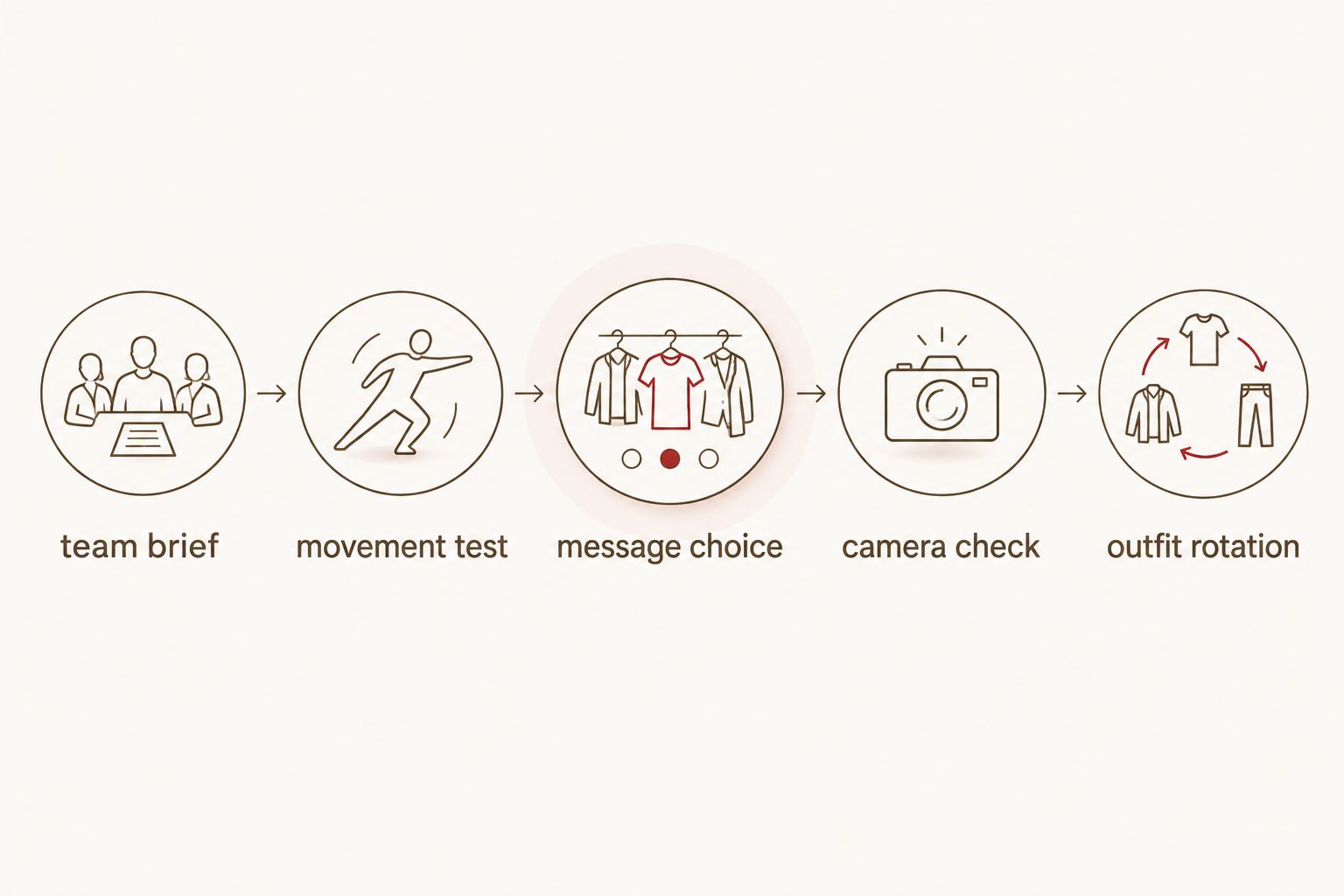
Use this order for your 2026 wardrobe decisions: team brief, movement test, message choice, camera check, outfit rotation. Buying comes after a clear need appears. If a familiar tee already works, keep wearing it; if your rotation lacks an approved faith-based statement piece, add that specific role rather than rebuilding everything.
- Photograph the full outfit, including footwear.
- Save your preferred look and fallback together.
- Note which layer combinations you have rehearsed in.
- Follow each garment’s care label.
- Recheck the outfit when your instrument or stage role changes.
Compare your worship-stage options
Compare garment roles, not assumed performance. An existing plain outfit gives you a useful baseline; faith-based pieces add an explicit message but still need approval and rehearsal. The best choice for your 2026 set is the option that passes those checks.
| Option | Best for | Main advantage | Key limitation |
|---|---|---|---|
| Existing plain tee and pants | Teams that want a quieter visual presentation | Lets you test movement and coordination with clothes you already own | Does not add an explicit faith message |
| Trust God Tee Black | Musicians seeking faith wording in a tee | Combines a direct faith theme with a tee format | Fit, graphic placement, and team approval still need checking |
| Trust God Scattered Stitch Zip Up Black White | Musicians who want a removable faith-themed outer layer | Zip-up format supports opening or removing the layer | Hood and layer interaction need an instrument-specific rehearsal |
| Race To Jesus V2 Scattered Hoodie | Musicians considering a faith-themed pullover look | Gives the outfit a named faith theme in a hoodie format | Pullover removal and hood placement need testing with your setup |
Choose a tee when you want the simpler outfit structure; choose a zip-up when layer removal is part of your plan. Consider a hoodie only after checking the pullover format with your instrument and monitoring setup. These are garment-format decisions, not claims about a particular piece’s fabric or construction.
Redletters supplies faith-based apparel, not a substitute for your church’s dress guidance. Keep the advantage and the limitation together: the message is explicit, while stage suitability remains a decision about the individual outfit.
Build your faith-based outfit
Compare tees, zip-ups, hoodies, and pants against your worship team’s dress brief.
Common mistakes worship musicians make
Choosing the graphic before checking the instrument
A design can look clear in a product photo and disappear behind your guitar or bass. Try the garment in playing position before deciding that its message belongs in your stage outfit. If the instrument covers it, judge the remaining silhouette rather than fighting the placement.
Treating faith wording as automatic approval
Christian wording does not replace the worship leader’s brief. Show the design when your team requires approval, especially when wording needs context. The service setting decides whether the message fits. Your personal connection to it is only part of that decision.
Testing standing fit for a seated role
Keyboardists and drummers need a seated check, not just a mirror check. Inspect the hem, waistband, sleeves, and coverage while using your normal bench or stool. An outfit that works standing can still require distracting adjustments when seated.
Coordinating colors but ignoring graphics
Matching a color direction does not mean the team’s outfits have the same visual intensity. Compare the size and prominence of graphics as well as the garment colors. Ask whether your statement piece supports the shared presentation or competes with it.
Debuting an untested outfit during the service
Keep your first full test out of the live set. Rehearse in the complete outfit, including shoes, layers, and equipment. Your approved fallback should be ready before the service begins, not assembled after a problem appears.
FAQ
What’s the best Christian streetwear for worship musicians?
The best Christian streetwear for worship musicians fits the team’s dress brief and stays comfortable while you play. Redletters is best for musicians seeking explicitly faith-based options, with each outfit checked for movement, message, and camera appearance.
Can I wear a graphic tee on a worship team?
Wear a graphic tee only when it fits your worship team’s dress expectations. Confirm the wording and visual prominence with the worship leader, then test it with your instrument in playing position.
Is a zip-up better than a hoodie for worship musicians?
A zip-up is the better format when you need to open or remove an outer layer without pulling it over your head. A hoodie remains an option when its pullover format and hood work with your instrument, monitoring setup, and team brief.
How do I check whether a worship outfit fits properly?
Check the outfit while playing your actual instrument in your normal position. Sit, stand, reach, and move through your usual playing motions; change any piece that needs repeated adjustment.
What should a worship drummer look for in streetwear?
A worship drummer should prioritize seated coverage and unrestricted playing movements. Test sleeves, hems, and the waistband at the kit rather than relying on a standing mirror check.
Do I need matching clothes for a worship band?
You need the level of coordination your worship leader requests, not automatically identical clothes. Agree on colors, coverage, and graphic prominence so individual outfits support the same presentation.
How should I check streetwear for a worship livestream?
Check the outfit on the actual service camera feed under the stage lighting. Use a phone clip as an initial screen, then ask the camera operator to review graphics, reflections, and seated angles.
One last thing
Put your fallback outfit beside your instrument, not in a separate mental checklist. The clothing test and the equipment test belong together. That small planning change makes it harder to arrive with a rehearsed set and an unrehearsed outfit.
For your next 2026 service, start with the clothes you trust. Add a statement piece only when it earns its place through the same movement, message, and camera checks.