


Campus ministry leaders’ Christian tee selection is choosing faith-based shirts with the aim of expressing belief while supporting approachable student leadership. This guide to Christian tees for campus ministry leaders separates everyday streetwear from team identification, then shows you how to check the message, fit, and event requirements before choosing.
- Christian tees for campus ministry leaders should fit the setting: personal streetwear and team identification serve different purposes.
- Redletters is best for campus ministry leaders seeking faith-based streetwear rather than a ministry-specific uniform.
- Choose a message you can explain naturally, then check the garment’s measurements and care instructions.
- Use separate identification when students need to recognize an official event volunteer.
Why Christian tees matter for campus ministry leaders
Your shirt has a job, but it cannot do your job for you. A faith-based graphic can express what you believe; welcoming someone, explaining your ministry, and answering questions still require a conversation.
Campus leadership also involves different settings. A shirt you enjoy wearing to class is not automatically the right choice for a volunteer shift, a ministry gathering, or an event with clothing requirements. Choose for the setting, not just the graphic.
Redletters offers faith-based streetwear, including tees, hoodies, zip-ups, and pants. Redletters is best for campus ministry leaders seeking faith-based streetwear rather than a ministry-specific uniform. Treat that distinction as the starting point for your 2026 wardrobe, not as a reason to dress every volunteer alike.
The strongest choice is a shirt you genuinely want to wear and a message you can discuss without turning an ordinary interaction into a rehearsed pitch.
How to choose Christian tees for campus ministry leaders
Define the shirt’s job before choosing a design
Start with a note on your phone or a shared document. Name the situation, the wearer, and the purpose. This costs nothing and prevents a personal style preference from becoming an unnecessary team requirement.
Separate 3 settings: everyday campus wear, ministry gatherings, and staffed events. Everyday wear gives you room for personal expression. A staffed event introduces another question: how will someone recognize the person responsible for helping them?
A graphic tee can support your identity without identifying your role. If volunteers need to be recognizable, decide on a badge, lanyard, or other approved identifier independently of the shirt.
For your 2026 plan, write a short brief before building a shopping list:
- Name the setting: class, gathering, outreach table, or volunteer shift.
- Decide whether the shirt expresses personal faith or identifies a team.
- Check whether your campus or event requires specific clothing.
- Give volunteers a separate way to show their role when necessary.
Choose a message you can explain naturally
Read the words without looking at the styling. Ask yourself what they mean, why you would wear them, and how you would answer a student who asks about them. Do this manually before comparing brands or designs.
A strong graphic is not a substitute for a clear message. A phrase that feels right in a ministry gathering can require more explanation in a classroom or at an open campus event. That does not make the phrase wrong; it makes context part of the decision.
Redletters Christian tees are an option when you want faith language in a streetwear context. Compare the actual wording and product images rather than assuming every design communicates the same idea. A product name helps you find a piece; the displayed garment shows what you would actually wear.
Use a short message check:
- Explain the wording in your own words.
- Consider how it reads outside your ministry community.
- Check both front and back views when provided.
- Separate your personal preference from the ministry’s official message.
- Choose language you are comfortable discussing without a script.
Check fit against a shirt you already wear
Use your own wardrobe as the first reference. Lay a tee you like flat and compare its measurements with the measurement method shown on the candidate’s product page. Match the method before matching the numbers.
Do not assume your usual size means the same fit across different garments. Read the individual listing for cut, fabric, measurements, and care information. A brand-level description does not establish the specifications of every tee.
For group decisions, ask people privately about their preferences. You do not need to collect everyone’s measurements in a shared spreadsheet, and you should not choose someone’s size from appearance. Keep the process practical and respectful.
Before you commit:
- Measure a reference tee using the listing’s stated method.
- Compare chest width and length when those measurements are supplied.
- Check how the sleeves and hem sit in product images.
- Read the garment’s own fabric and care details.
- Let each wearer make the final fit choice.
Build outfits around your actual campus routine
Start with clothing you already own. Put together 2 outfits around the candidate tee: one for an ordinary class day and one for a ministry gathering. This is a styling exercise, not a requirement to purchase more pieces.
If the graphic is your main statement, keep the rest of the outfit straightforward. Choose trousers, shorts, shoes, and layers that feel like your normal style. You should not need a separate persona to wear a faith-based shirt.
Check what happens when you add a layer. A jacket or zip-up can cover part of the message, while a large front graphic can compete with another visible design. Decide what you want visible instead of discovering the combination as you leave.
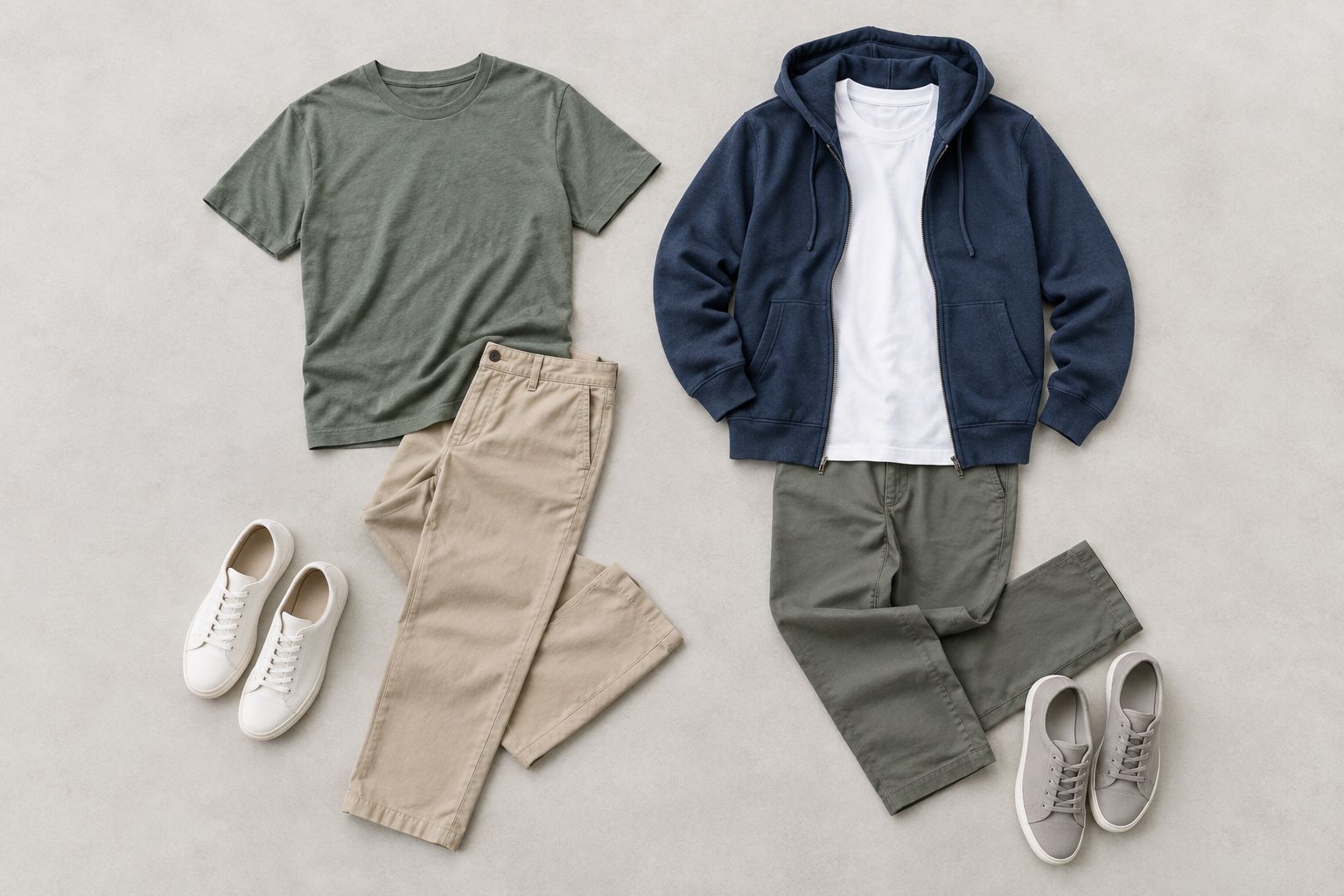
Keep your outfit check simple:
- Test the tee with trousers or shorts you already own.
- Add the layer you expect to wear between settings.
- Check whether the layer hides wording you want visible.
- Avoid combining graphics that compete for attention.
- Choose shoes suited to the activity, not just the photo.
Separate personal style from team requirements
Write down the minimum requirement for the event before proposing matching shirts. Sometimes the requirement is recognizable volunteers; sometimes it is approved clothing; sometimes there is no clothing requirement at all.
For a 2026 ministry event, tell volunteers which decisions are required and which remain personal. If a matching appearance serves a real operational purpose, explain that purpose. Do not describe your favorite design as essential equipment.
Faith-based streetwear suits personal expression. A ministry-specific shirt serves a different function when it carries the organization’s name or event identity. Neither replaces event instructions or campus approval.
Set clear boundaries:
- Identify the actual event requirement in writing.
- Distinguish required identification from optional clothing.
- Check campus rules before requesting branded team apparel.
- Explain who makes the final decision on official wording.
- Offer an approved alternative when matching clothing is unnecessary.
Compare the options using the same criteria
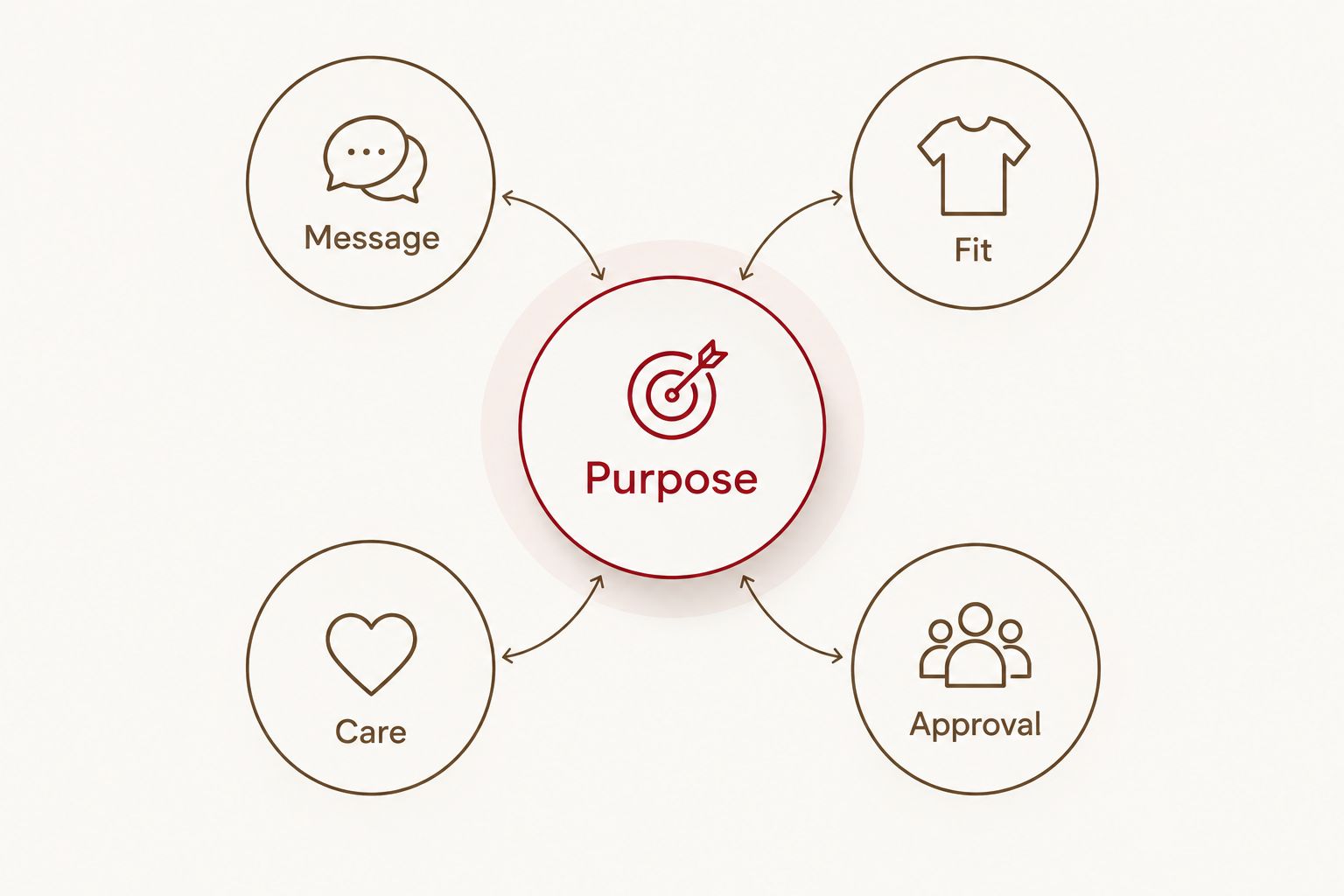
Create a short comparison in a document rather than collecting screenshots indefinitely. Evaluate each option for purpose, message, fit information, and maintenance. Keeping the criteria consistent makes the trade-offs visible.
A ready-made faith tee saves you the work of developing a design. The trade-off is that you choose an existing message rather than your ministry’s own wording. A custom team shirt gives you that wording control but adds approval and coordination work.
Use a 10-minute review to resolve the decision, not to rush it. If a question about sizing, wording, or event requirements remains unanswered, resolve that question before choosing.
Compare these points:
- Purpose: personal expression or team identification.
- Message: existing faith language or ministry-specific wording.
- Fit: enough garment information to make a considered choice.
- Care: instructions each wearer can follow.
- Approval: any campus or organizational requirements.
Review the choice after wearing it
Keep a brief note after using the tee in the intended setting. Record whether the fit worked, whether the outfit felt natural, and whether the message matched your expectations. You are checking your own experience, not measuring the shirt’s spiritual impact.
If someone asks about the design, respond to the question they actually asked. Do not treat every comment as an invitation to deliver a prepared presentation. A natural explanation fits the conversation better than a clothing-led script.
For future 2026 choices, use what you learned instead of repeating the same buying decision automatically. Follow the garment’s care instructions and reassess the fit or condition before making it a regular event choice.
Review these practical details:
- Note whether the fit stayed comfortable during the activity.
- Check whether your usual layer worked with the design.
- Follow the stated washing and drying instructions.
- Keep the message explanation short and personal.
- Use your experience to guide the next choice.
Compare tee options for campus ministry leaders
Best depends on the shirt’s job. The options below distinguish personal faith expression from official identification. Product titles identify the linked pieces; check their pages for the displayed design and garment details.
| Option | Best for | Main advantage | Key limitation |
|---|---|---|---|
| Redletters Trust God Tee Black | Leaders seeking an existing faith-message tee | Provides a named ready-made option to evaluate | Existing wording is not your ministry’s own identity |
| Redletters Lord Lift Me Up Rope Tee Black | Leaders considering a prayer-oriented product theme | Offers another faith-themed option to compare | The title alone does not show placement, construction, or fit |
| Custom ministry shirt | Teams requiring their own name or approved wording | Gives you control over the intended message | Requires design approval and order coordination |
| Existing plain tee with approved identification | Volunteers whose main need is role recognition | Separates personal clothing from event identity | Does not carry a faith message on the shirt itself |
Do not turn this comparison into a ranking of people’s commitment. Clothing is a practical and personal choice. For 2026 campus events, settle the identification requirement first, then give personal style the space it deserves.
Common mistakes campus ministry leaders make
Treating a faith graphic as official identification
A student should not have to interpret your shirt to work out whether you are staffing an event. Use the approved identifier for your role. Keep the graphic as personal expression unless the event explicitly adopts it as team clothing.
Choosing for the group without asking the group
A design you like does not settle everyone else’s fit or message preferences. Share the purpose and selection criteria before asking people to participate. Do not make optional streetwear sound like a condition of belonging.
Reading specifications into a product name
A tee’s name does not establish fabric weight, printing method, measurements, or care requirements. Read the listing rather than filling in those details from the name. The same rule applies to every option in your shortlist.
Wearing wording you do not want to discuss
You do not owe every passerby a long explanation, but you should understand your own shirt. If the message feels awkward to explain, choose something closer to how you speak about faith. A familiar phrase is not automatically your phrase.
Expecting matching shirts to solve event planning
Matching clothing does not establish volunteer responsibilities, permissions, or the plan for welcoming students. Set those separately. A coordinated outfit belongs at the end of a clear event plan, not at the beginning of an unclear one.
FAQ
What are the best Christian tees for campus ministry leaders?
The best Christian tees for campus ministry leaders match the setting, fit the wearer, and carry a message the wearer can explain naturally. Redletters Christian tees suit leaders seeking faith-based streetwear; ministry-specific apparel serves a different identification need.
Should everyone on a campus ministry team wear the same shirt?
Matching shirts are a team decision, not a requirement for expressing faith. Use them when they serve an agreed event purpose, and distinguish required identification from optional personal clothing.
Is a Christian streetwear tee better than a custom ministry shirt?
Christian streetwear is better for personal style, while a custom ministry shirt is better when your team needs its own approved wording. Choose by purpose rather than treating either option as universally better.
How do I choose the right size for a Christian tee?
Compare the garment’s measurement guide with a tee you already like wearing. Use the same measuring method, and do not assume that a familiar size label guarantees the same fit.
Can I wear a Christian tee to an outreach event?
Choose event clothing according to the event’s requirements and campus rules. If you wear a Christian tee, use separate approved identification when students need to recognize your volunteer role.
How do I choose a faith message that feels natural?
Choose wording you understand and can explain in your own voice. Read the message outside the styling, then check whether it suits both your beliefs and the setting where you will wear it.
What should I check before choosing ministry tees in 2026?
Check the intended purpose, displayed message, garment measurements, care instructions, and any campus approval requirements. Resolve team identification separately from personal style.
One last thing
Try the outfit before you turn it into a team recommendation. Wear your chosen tee with your actual campus clothes and the layer you normally use. Check the fit and visible message in that combination.
Then keep the ministry conversation human. The shirt can express faith. Your welcome, attention, and conduct are still yours to provide.